
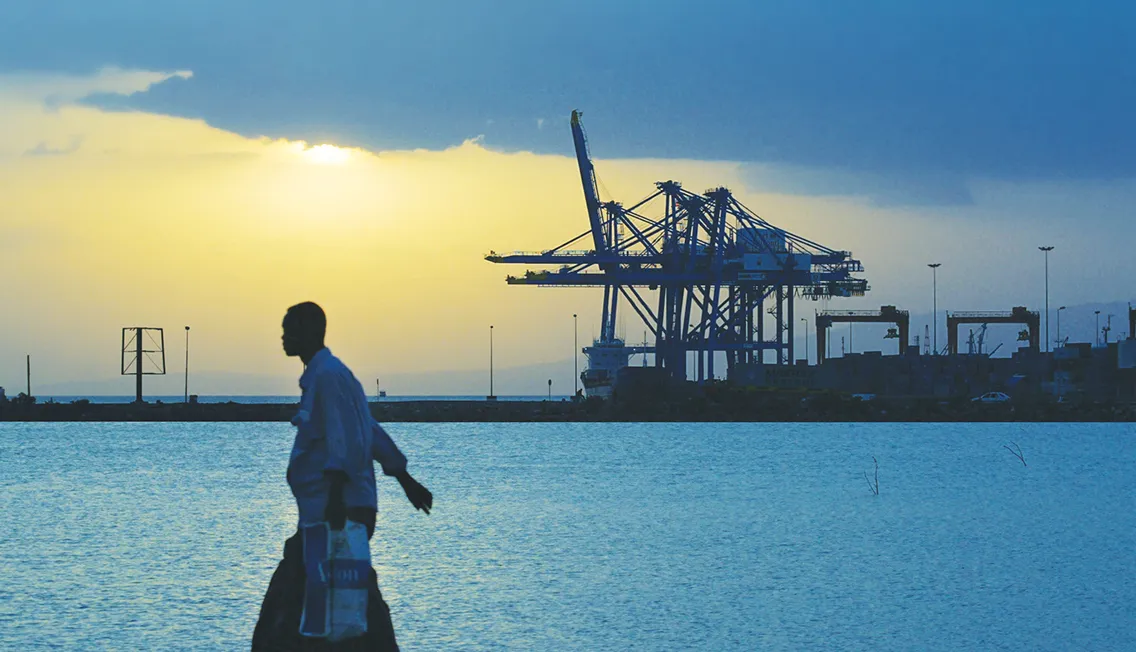
Djibouti is a country that defies categorisation
Carlos Lopes, a professor at the Nelson Mandela School of Public Governance, University of Cape Town, writes that a combination of diplomatic dexterity, political maturity and the ability to extract value from its geopolitical situation has enabled Djibouti to thrive in one of the world’s most volatile regions.
Perched on the Horn of Africa, Djibouti occupies a territory so small one might miss it on a map, yet it commands the attention of global powers and investors alike. How does such a modest-sized nation emerge as a linchpin in international geopolitics and a promising investment destination? The answer lies in a combination of geography, vision, and a finely honed diplomatic instinct that has allowed Djibouti to not only survive but thrive in one of the world’s most volatile neighbourhoods.
Bordering Eritrea, Ethiopia and Somalia by land and Yemen by sea – countries historically mired in conflict – Djibouti has managed to chart a remarkably stable course. It has become something of a regional anomaly, carefully navigating the treacherous waters of East African and Red Sea politics, while avoiding entanglement in the disputes and wars that have plagued its neighbours.
This diplomatic dexterity is not accidental; it is the result of deliberate choices by Djibouti’s leadership to prioritise neutrality, open dialogue, and balanced partnerships over risky alliances. Few other nations can claim to host military bases from three of the world’s largest powers – the United States, France, and China – simultaneously, along with smaller presences from countries like Japan and Italy.
First Published by African Business